 WhatsApp

The First 48 Hours After Dental Implant Surgery: What to Expect
Implant placement is usually less unpleasant than patients expect. The two days afterwards are the part worth preparing for: not because they are difficult. But because knowing what is normal stops you worrying about things that are.
This is what we tell every implant patient at our BTM Layout and JP Nagar clinics before they leave the chair.
The short answer: Swelling peaking around 48 hours is normal and expected after implant surgery. Apply ice to the outside of the face in 20-minute intervals for the first day, eat soft food avoiding the surgical side. And do not disturb the site. Pain that increases after day two is the sign to call.
Some swelling is normal and expected
Swelling begins a few hours after surgery, builds through day one, and peaks somewhere around 48 hours before receding. Peak swelling on day two is not deterioration. It is the expected curve. And it catches people out because they assume each day should be better than the last.
Some bruising on the cheek or under the jaw is also normal and can appear a day or two later, sometimes tracking downwards under gravity. It looks worse than it is. Mild oozing on the first evening is expected. What is not expected is swelling that is still increasing on day four, or swelling that spreads towards the eye or under the jaw. That is a call, not a wait.
Ice on the outside, 20 minutes at a time
Ice on the outside of the face over the surgical area, twenty minutes on and twenty minutes off, for the first 24 hours. Not directly against the skin, wrap it.
Cold constricts blood vessels and genuinely limits how much swelling develops, but the window is short. After the first day ice does very little. And from day three gentle warmth is more helpful for resolving what is already there. Sleep with your head elevated on an extra pillow for the first two nights. Lying flat increases blood pressure at the site and makes both swelling and throbbing worse. Take the painkillers we have prescribed on schedule for the first day rather than waiting for pain to arrive. Staying ahead of it works better than catching up.
Soft food, nothing chewed on that side
Soft, cool food for the first 24 hours, and nothing chewed on the surgical side for considerably longer. Curd, dal, mashed rice, khichdi cooled down, smoothies eaten with a spoon.
No straws for at least three days, the suction disturbs healing at the site. Nothing hot on day one, since heat can restart bleeding. Avoid anything with small hard particles that can lodge in the surgical site: nuts, seeds, popcorn, chips. Reintroduce texture gradually over the following week, still favouring the other side. And no smoking: nicotine constricts the blood supply the site needs to heal. And smoking is the largest single risk factor for early implant failure. If you smoke, the first 72 hours matter most and two weeks is far better.
Do not disturb the site with your tongue
The instinct to explore the site with your tongue is strong and worth resisting. So is lifting the lip to inspect it in a mirror repeatedly, which stretches the tissue at the sutures.
Do not rinse at all on day one. From day two, gentle warm salt water rinses several times a day. Let it move across the area rather than swishing forcefully. Brush the rest of your mouth normally that same evening. And keep the brush away from the surgical site itself for a few days, then resume gently with a soft brush. Keeping the rest of your mouth clean actively helps by reducing the bacterial load. If you have been given a chlorhexidine mouthwash, use it for the course prescribed and then stop.
Call us if pain increases after day two
The reliable signal is direction of travel. Pain that peaks on day one or two and then steadily improves is normal recovery. Pain that is improving and then gets worse from day three onwards is not. And it is the pattern that warrants a call.
Also call for: bleeding that restarts properly after the first day, swelling still increasing on day four, a bad taste or discharge, fever, numbness that has not resolved several hours after the anaesthetic should have worn off, or a suture that has come away early. None of these are common, and most are straightforward to deal with when caught early. We answer 24/7 on +91 93538 45416, and asking is always better than waiting to see. If swelling involves the eye or the floor of the mouth, or you have difficulty swallowing or breathing, treat that as a hospital emergency.
What it costs at Dentick
These are our current published prices for dental implant at both the BTM Layout 2nd Stage and JP Nagar 7th Phase clinics. You receive the full cost in writing before any treatment begins, and the written figure is the figure. The complete list for every treatment we offer is on our published price list.
| Treatment | Cost |
|---|---|
| Regular implant system (per implant, includes crown) | ₹35,000 – ₹40,000 |
| Imported implant system (per implant, includes crown) | ₹40,000 – ₹45,000 |
Frequently asked questions
How long does pain last after dental implant surgery?
Most patients need painkillers for two to three days, with the worst of it on day one and two. By day four or five, discomfort is usually mild or gone. Multiple implants or a bone graft extend this somewhat. Pain that is increasing after day two is the exception that needs checking.
When can I go back to work after an implant?
Most people return the next day for a single straightforward implant. Take the day of surgery off, and expect to look slightly swollen for two to three days. For multiple implants, grafting or sinus lift procedures, allow two to three days. Avoid heavy exercise and lifting for at least three to five days, since raised blood pressure can restart bleeding.
Is swelling after implant surgery normal?
Yes, and it peaks around 48 hours rather than immediately, which is why day two often feels like a step backwards. Bruising on the cheek or jaw is also normal and may appear late. What is not normal is swelling still increasing after day three, or swelling spreading towards the eye or throat.
Can I brush my teeth after implant surgery?
Brush the rest of your mouth normally the same evening. This helps rather than hinders. Keep the brush off the surgical site for a few days, then resume gently with a soft brush. Start gentle warm salt water rinses from day two, never on day one.
What if a stitch comes out early?
It is usually not an emergency, but call us and let us know. Many implant sutures are designed to dissolve within one to two weeks anyway. If the site opens or you can see the healing cap or bone, we would want to see you sooner rather than later.
Can I take ibuprofen after implant surgery?
Follow whatever we have prescribed, which is usually a combination taken on schedule for the first day rather than waited for. Ibuprofen is generally effective for post-surgical dental pain because the problem is inflammatory, assuming no medical reason you should not take it. Tell us about stomach ulcers, kidney problems, asthma or blood thinners before surgery, since they change what we prescribe.
When can I brush over the implant site?
Brush the rest of your mouth normally the same evening. Keeping the overall bacterial load down actively helps the site heal. Keep the brush off the surgical area itself for around three to five days, then resume gently with a soft brush. Start gentle warm salt water rinses from day two, never day one. If a chlorhexidine mouthwash has been prescribed, use it for the full course and then stop.
Is numbness after implant surgery normal?
Numbness from the local anaesthetic wears off within a few hours. Numbness or tingling in the lip or chin that persists beyond that, particularly after a lower jaw implant, should be reported to us the same day. It is uncommon, especially where a CBCT scan has mapped the nerve position in advance, and early assessment matters. Do not wait to see whether it resolves on its own.
Can I use a straw or water flosser after implant surgery?
No straws for at least three days, suction disturbs the healing site. A water flosser should be kept away from the surgical area for the first two weeks. And then used on a low setting. Once the site has healed and the crown is fitted, a water flosser becomes genuinely useful for daily maintenance around the implant.
What should I do about the temporary tooth?
If you have a removable temporary, take it out at night and clean it separately. And expect it to feel less stable than a final crown. It is not designed to load the implant. Avoid chewing on it. If it rubs the surgical site or feels like it is pressing on the healing area, come in for an adjustment rather than persevering. Pressure on a healing implant site is exactly what you want to avoid.
How soon can I have the crown fitted?
Three to six months after placement in most cases, once we have confirmed the implant has integrated with the bone. Lower jaw sites are usually at the faster end, upper jaw and grafted sites at the slower. It is checked rather than assumed. Loading an implant that has not fully integrated is a common cause of failure. And the wait is what makes the result permanent.
Is bruising after implant surgery normal?
Yes, and it can appear a day or two later and track downwards under gravity, sometimes reaching the jawline or neck. It looks considerably worse than it is and fades over a week to ten days. What is not expected is bruising with increasing swelling after day three, fever, or a spreading firm area, those warrant a call on +91 93538 45416.
If anything about your recovery does not match what is described here, call rather than search — +91 93538 45416, answered at any hour. A short conversation usually settles it.
Related reading
- What a Dental Implant Actually Costs in Bangalore (2026 Price Breakdown)
- Implant or Bridge for One Missing Tooth? An Honest Comparison
- 5 Things Nobody Tells You Before Getting a Dental Implant
Book an appointment in BTM Layout or JP Nagar
Dentick Dental Care runs two clinics in South Bengaluru, BTM Layout 2nd Stage and JP Nagar 7th Phase. Open 24 hours, seven days a week. Consulting sessions run 11am–2pm and 5pm–8:30pm. Book within those and you will be seen without waiting. Walk-ins and emergencies are attended at any hour, with a short wait outside session times. Evening sessions mean you do not need to take a weekday morning off. Read more about this treatment.
Call or WhatsApp +91 93538 45416 to book. Consultations start at ₹300 and include a written treatment plan with exact costs. We also serve patients from Koramangala, HSR Layout, Jayanagar, Bannerghatta Road, Arekere, Bommanahalli and Gottigere.
5 Things Nobody Tells You Before Getting a Dental Implant
People arrive expecting an implant to be like a filling: come in, have it done, leave with a tooth. The reality is a staged process spread over months, and knowing that upfront changes how you plan around it.
None of what follows is a warning. Implants are the most predictable tooth replacement available and we place them every week at both clinics. It is simply the version of the process we would want explained to us.
The short answer: A dental implant is not a single appointment. It is a 3D scan, a surgical placement, three to six months of healing while the implant fuses to bone. And a second visit for the crown. The surgery is usually the easiest part of the process.
A 3D scan happens before anything is placed
Before anything is placed, we take a CBCT scan, a three-dimensional X-ray of your jaw. It takes under a minute and it decides everything that follows.
What we are looking at is bone height, bone width, bone density, exactly where the inferior alveolar nerve runs in the lower jaw. And how low the maxillary sinus sits in the upper. From that we plan the implant’s length, width, angle and position before you are in the chair. Planning an implant from a flat OPG is possible and was standard for years. But it means discovering problems during surgery. The scan is also what makes the quote reliable. It is how we know whether you need a graft before we tell you the price.
The placement itself is usually the easy part
The surgery surprises almost everyone. Under local anaesthetic, placing a single implant takes around thirty to forty-five minutes and most patients describe it as less unpleasant than the extraction that preceded it. There is pressure and vibration, no pain.
Afterwards, expect swelling that peaks around day two, some soreness for three or four days. And ordinary painkillers to be sufficient. Most people are back at work the next day. The genuinely difficult part of an implant is not the appointment you were dreading. It is the waiting that comes after it, which nobody dreads and everybody underestimates.
Healing takes months, not days
Osseointegration, bone growing into the implant surface and locking it in place, takes three to six months. It cannot be rushed, and loading an implant before it has integrated is how implants fail.
Lower jaw sites are usually at the faster end, upper jaw and grafted sites at the slower. If you had a bone graft or sinus lift first, add several months again before the implant itself goes in. This is why anyone planning around a wedding or a move abroad should start the conversation nine to twelve months ahead, not three. During this period you are not toothless, a temporary crown or a removable tooth fills a visible gap.
The crown comes later, at a second visit
Once integration is confirmed, you come back for the abutment and the crown. This involves an impression or a digital scan, then the crown is made in a lab over one to two weeks, then fitted.
The crown is where the aesthetics are decided (shade, shape, how it emerges from the gum) and it is worth spending time on if it is a front tooth. We will check it in your mouth before it is finally cemented. And if the shade is not right, it goes back. This is also the visit where a lot of the cost sits. Which is why quotes that exclude the crown are so misleading: you are not most of the way to a finished tooth when the fixture is placed.
It needs cleaning like a natural tooth, forever
An implant cannot decay. What it can do is lose the bone around it. And peri-implantitis is the single largest cause of implants failing years after successful placement.
It behaves like gum disease: plaque accumulates at the junction of implant and gum, inflammation follows. And bone is lost, often painlessly, until the implant is loose. Prevention is ordinary and unglamorous: brush it like a natural tooth, clean underneath and around it with an interdental brush or water flosser daily. And keep six-monthly reviews so we can measure the bone level around it while any change is still reversible. Smoking materially increases the risk. An implant is a permanent fixture that requires permanent maintenance, and that is the part people are least often told.
What it costs at Dentick
These are our current published prices for dental implant at both the BTM Layout 2nd Stage and JP Nagar 7th Phase clinics. You receive the full cost in writing before any treatment begins, and the written figure is the figure. The complete list for every treatment we offer is on our published price list.
| Treatment | Cost |
|---|---|
| Regular implant system (per implant, includes crown) | ₹35,000 – ₹40,000 |
| Imported implant system (per implant, includes crown) | ₹40,000 – ₹45,000 |
Frequently asked questions
How long does the whole dental implant process take?
Typically three to six months from placement to final crown for a straightforward case. Add three to six months if you need a bone graft or sinus lift first. Immediate loading, a temporary crown on the same day, is possible in selected cases with good bone stability. But it is not suitable for everyone and should not be promised before the scan.
Will I have a gap while the implant heals?
Not a visible one. For front teeth we provide a temporary, either a removable partial or a temporary bridge, for the healing period. For back teeth, many people choose to leave it, since it is not visible and eating is unaffected. Either way, tell us if the appearance matters to you and we will plan for it.
What can make a dental implant fail?
Smoking is the largest modifiable factor. Uncontrolled diabetes, poor oral hygiene leading to peri-implantitis, heavy grinding without a night guard. And insufficient bone at placement are the others. Failures in the first few months are usually integration problems; failures years later are almost always bone loss from plaque. Both are far more about maintenance than about the implant itself.
Am I too old for a dental implant?
There is no upper age limit. What matters is bone volume and general health, not the number. We place implants routinely in patients in their seventies. The relevant questions are whether you are on bisphosphonates or blood thinners, whether diabetes is well controlled. And whether you can manage the daily cleaning. All of which we go through at the consultation.
Does the implant look like a real tooth?
A well-made implant crown is difficult to distinguish from a natural tooth, particularly on back teeth. Front teeth are more demanding because the gum contour and the way the crown emerges from it matter as much as the shade. This is exactly where taking the extra visit to check the crown before cementing is worth it. And we would rather send one back than fit something you are not happy with.
What is osseointegration?
It is the process by which living bone grows directly onto the surface of the titanium implant and locks it in place. It takes three to six months and it is what makes an implant function like a root rather than a screw sitting in a hole. It cannot be accelerated, and loading an implant before integration is complete is one of the main causes of early failure, which is why the crown is deliberately fitted at a second visit months later.
What is a bone graft or sinus lift?
Both create the bone volume an implant needs where there is not enough. A graft adds material to a ridge that has resorbed after tooth loss. A sinus lift raises the floor of the maxillary sinus in the upper back jaw, where the sinus often sits too low for an implant to be placed safely. Both add cost and three to six months to the timeline. And both appear in the written plan before anything begins rather than being discovered mid-treatment.
Can I have an MRI scan with dental implants?
Yes. Titanium is not ferromagnetic and dental implants are considered MRI-safe. They may cause some local image distortion on a head or neck scan. So mention them to the radiographer, along with any metal crowns or orthodontic retainers. They will not trigger airport security either.
What is peri-implantitis?
Inflammation and progressive bone loss around an implant, driven by plaque accumulating at the junction of implant and gum. It behaves much like gum disease and it is the single largest cause of implants failing years after successful placement. It is usually painless until the implant is loose. Which is why six-monthly reviews measuring the bone level matter: caught early, it is treatable; caught late, it is not. Smoking substantially increases the risk.
How do I clean a dental implant?
Brush it exactly as you would a natural tooth, twice a day. And clean around and underneath it daily with an interdental brush sized to the space. A water flosser is a useful addition but does not replace bristles. The critical area is the junction where the crown meets the gum. An implant cannot decay, so the entire maintenance question is about keeping that junction free of plaque, and it is a permanent requirement, not a settling-in period.
Can smokers have dental implants?
Yes, but with a clearly higher failure rate, and you should be told that plainly before deciding. Nicotine constricts the blood supply the site needs to heal and smokers have significantly higher rates of both early failure and later peri-implantitis. Stopping for two weeks before and eight weeks after placement makes a measurable difference. We will not refuse to treat you for smoking. We will make sure the decision is informed.
What happens if an implant fails?
The implant is removed, which is usually straightforward if it has not integrated. The site is allowed to heal, often with a graft, and a replacement can generally be placed after several months. It is not the end of the road, though it costs time. Early failures are usually integration problems; late failures are almost always peri-implantitis from plaque. Discuss what the practice does in the event of failure before you commit. It is a fair question and you should get a clear answer.
If you are considering an implant, the useful first step is the scan and a written plan. You will know the timeline, the total cost and whether you need a graft before committing to anything. Consultations start at ₹300.
Related reading
- What a Dental Implant Actually Costs in Bangalore (2026 Price Breakdown)
- Implant or Bridge for One Missing Tooth? An Honest Comparison
- The First 48 Hours After Dental Implant Surgery: What to Expect
Book an appointment in BTM Layout or JP Nagar
Dentick Dental Care runs two clinics in South Bengaluru, BTM Layout 2nd Stage and JP Nagar 7th Phase. Open 24 hours, seven days a week. Consulting sessions run 11am–2pm and 5pm–8:30pm. Book within those and you will be seen without waiting. Walk-ins and emergencies are attended at any hour, with a short wait outside session times. Evening sessions mean you do not need to take a weekday morning off. Read more about this treatment.
Call or WhatsApp +91 93538 45416 to book. Consultations start at ₹300 and include a written treatment plan with exact costs. We also serve patients from Koramangala, HSR Layout, Jayanagar, Bannerghatta Road, Arekere, Bommanahalli and Gottigere.
Implant or Bridge for One Missing Tooth? An Honest Comparison
One missing tooth, two established ways to replace it, and a decision most people make on price alone. Price is a reasonable input. It is just not the only one. And the difference that matters most is what each option does to the teeth on either side.
Here is how we actually talk this through with patients at our BTM Layout and JP Nagar clinics, including the cases where a bridge is genuinely the better answer, which do exist.
The short answer: An implant replaces the tooth without touching its neighbours and preserves the bone underneath, but costs more and takes months. A bridge is faster and cheaper but requires filing down two healthy adjacent teeth. Where there is adequate bone and the neighbouring teeth are sound, an implant is usually the better long-term choice.
An implant leaves the neighbouring teeth untouched
An implant is a standalone tooth. A titanium fixture goes into the bone where the root used to be. And a crown goes on top of it. The teeth either side are not involved at all: not filed, not crowned, not loaded.
That matters most when those neighbours are healthy and unrestored. Filing down a virgin tooth to carry a bridge is an irreversible decision. And it puts that tooth on a path towards needing a root canal at some point. The published figures for pulp death in bridge abutment teeth are not trivial. If the teeth either side of your gap have never been touched, that is a strong argument for the implant.
A bridge is quicker but files down two healthy teeth
A three-unit bridge spans the gap by crowning both neighbours and suspending a false tooth between them. It is well-proven, it can be done in two to three weeks rather than months, and it costs less upfront.
The cost is the two healthy teeth. They are reduced substantially to make room for the crowns, and that reduction is permanent. There is also a maintenance consideration people are rarely warned about: you cannot floss between bridged units normally. And cleaning underneath the false tooth with a threader or interdental brush becomes a daily requirement. Bridges most often fail not because the bridge breaks but because decay starts at the margin of one of the supporting crowns.
Bone volume decides what is possible
This is the constraint that overrules preference. Bone starts resorbing the moment a tooth is lost, most rapidly in the first year. And an implant needs sufficient bone volume and density to be placed safely.
If you lost the tooth recently, you almost certainly have enough. If it has been missing for five years, you may need a graft first, which adds cost and several months. In the upper back jaw the sinus sits close above, and a sinus lift may be needed. None of this rules an implant out; it changes the timeline and the price. It is also the strongest argument for not deferring the decision indefinitely. Because the option quietly gets more expensive the longer the gap stays empty.
A 3D scan answers it in a single visit
A CBCT scan settles it. It shows bone height, width and density in three dimensions, exactly where the nerve canal runs in the lower jaw. And how low the sinus sits in the upper. From that we can tell you in the same visit whether a standard implant is possible, whether you need a graft, and what each route costs.
What this replaces is guesswork. Planning an implant from a flat OPG X-ray means finding out about a bone deficiency during surgery rather than before it. And that is how people end up with a price that changes mid-treatment. We will not quote an implant without the scan.
Both are on our published price list
Both appear on the price list published on this site, with no separate consultation quote required to see them. A single implant including the crown is ₹35,000 to ₹45,000. Bridge pricing depends on the crown material, and the full range is on the price list.
Set against each other over twenty years, the gap narrows more than people expect: a bridge typically needs replacing after ten to fifteen years, and each replacement costs again. An implant fixture is designed to be permanent, with the crown as the wearing part. That is not an argument that an implant is always right. It is an argument that comparing the two on today’s price alone gives you the wrong answer.
What it costs at Dentick
These are our current published prices for dental implant at both the BTM Layout 2nd Stage and JP Nagar 7th Phase clinics. You receive the full cost in writing before any treatment begins, and the written figure is the figure. The complete list for every treatment we offer is on our published price list.
| Treatment | Cost |
|---|---|
| Regular implant system (per implant, includes crown) | ₹35,000 – ₹40,000 |
| Imported implant system (per implant, includes crown) | ₹40,000 – ₹45,000 |
Frequently asked questions
Is a bridge ever better than an implant?
Yes, in several situations. If the teeth either side already need crowns, a bridge uses work you were going to do anyway. If there is severe bone loss and you would rather not have grafting. If you need the gap closed in weeks rather than months for a specific reason. And if a medical condition or heavy smoking makes implant success materially less predictable. We will tell you when that is your case.
How long does each option take?
A bridge takes two to three weeks and two to three visits. An implant takes three to six months in total. Because the fixture must integrate with bone before the crown is loaded. Although a temporary tooth can usually fill the gap in the meantime. If the gap is visible when you smile, you will not be walking around with a space.
What happens if I just leave the gap?
The bone under the gap resorbs, the neighbouring teeth drift and tilt into the space. And the opposing tooth over-erupts downwards. Over years this changes your bite and makes any future replacement more complex and more expensive. A single back tooth is the one people most often leave, and it is also the most common reason a straightforward implant becomes a graft case.
Which lasts longer, an implant or a bridge?
Implant fixtures show survival above 90% at ten years and many last decades. Bridges typically last ten to fifteen years before needing replacement, usually because of decay at a crown margin rather than fracture. Both depend far more on cleaning than on which was chosen.
Can I get an implant years after losing the tooth?
Usually yes, but often with a bone graft first, which adds three to six months and additional cost. There is no time limit that makes it impossible. The scan tells us what your specific site needs, and quite often patients who assumed they had waited too long turn out to have enough bone.
How do the costs compare between an implant and a bridge?
A single implant including the crown is ₹35,000 to ₹45,000 at Dentick. A three-unit bridge costs less upfront, with the exact figure depending on the crown material and shown on the published price list. Over twenty years the gap narrows considerably. Because a bridge typically needs replacing after ten to fifteen years and each replacement costs again. While an implant fixture is designed to be permanent with only the crown as a wearing part.
What is a Maryland bridge?
A conservative type of bridge that bonds a false tooth to the back of one or both neighbouring teeth with thin metal or ceramic wings, rather than crowning them. Its great advantage is that it removes very little tooth structure. Its limitation is that it is less strong and can debond. So it suits front teeth and light bites far better than molars. For a young patient who has lost a front tooth and is not yet ready for an implant, it is often the right interim answer.
Can a bridge replace more than one missing tooth?
Yes, but the span matters. Two adjacent missing teeth can often be bridged from the teeth either side. Beyond that, the supporting teeth are carrying a load they were not designed for. And the risk of failure rises sharply. For longer gaps an implant-supported bridge, where implants rather than natural teeth carry the span, is the more predictable answer. And it protects the remaining teeth entirely.
Which hurts more, an implant or a bridge?
Neither should hurt at the time; both are done under local anaesthetic. An implant involves minor surgery, so expect two to three days of swelling and soreness afterwards, managed with ordinary painkillers. A bridge involves no surgery, but the teeth being prepared can be sensitive for a period afterwards, particularly to cold, until the permanent bridge is cemented. Most patients report the implant as the more uncomfortable of the two for a few days and then entirely forgotten.
Which is easier to clean?
An implant, clearly. It is cleaned like a natural tooth, with a brush and an interdental brush or floss around it. A bridge cannot be flossed normally between the units. So cleaning underneath the false tooth requires a threader or a specific interdental brush every day, and bridges most often fail because decay starts at the margin of a supporting crown, which is a cleaning problem. If you know you will find that daily routine difficult, it is a genuine argument for the implant.
What if I cannot afford either option right now?
Tell us, because the sensible answer depends on which tooth it is. For some back teeth, monitoring the gap for a period is reasonable. For others, a removable partial denture is an inexpensive interim that holds the space and stops the neighbouring teeth drifting, which protects your future options. What is worth avoiding is leaving a gap indefinitely without a plan, since bone loss and tooth drift quietly make the eventual replacement more complex and more expensive.
Do dental implants set off airport metal detectors?
No. Titanium is not ferromagnetic and the quantity in a dental implant is far too small to trigger a walk-through detector. Implants are also safe with MRI scanning. If you are having a head or neck MRI, mention any dental work anyway. Metal crowns and orthodontic appliances can cause image distortion. Though they are not a safety problem.
Bring the question in and we will scan the site and cost both routes properly, side by side. You will leave with two written numbers and a clear recommendation, and no pressure to take the more expensive one.
Related reading
- What a Dental Implant Actually Costs in Bangalore (2026 Price Breakdown)
- 5 Things Nobody Tells You Before Getting a Dental Implant
- The First 48 Hours After Dental Implant Surgery: What to Expect
Book an appointment in BTM Layout or JP Nagar
Dentick Dental Care runs two clinics in South Bengaluru, BTM Layout 2nd Stage and JP Nagar 7th Phase, open 11am–2pm and 5pm–8:30pm, seven days a week including Sunday. Evening appointments mean you do not need to take a weekday morning off. And we answer the phone 24/7 for genuine emergencies. Read more about this treatment.
Call or WhatsApp +91 93538 45416 to book. Consultations start at ₹300 and include a written treatment plan with exact costs. We also serve patients from Koramangala, HSR Layout, Jayanagar, Bannerghatta Road, Arekere, Bommanahalli and Gottigere.
Dental Implants That Look, Feel and Function Like Natural Teeth
Missing teeth are not just about your smile; rather, it can affect the way you chew your food and talk. This brings us to the importance of artificial teeth in relation to the modern solution of dental implants. For sure, dental implants are the technique incorporated in implantation dentistry. If you are living with missing teeth or uncomfortable dentures, you’ve likely asked the big question: “Are dental implants worth?” The dentick dental care page will lead you to the right breakdown.
What Are Dental Implants?
Natural oral structure is the perfect composure of strength and beauty! Natural teeth may be lost due to various reasons. But dental implants offer the best alternative to restore strength and elegance. Dentists place titanium tooth roots directly into the jawbone through a safe surgical procedure, creating a strong and stable foundation for replacement teeth. At the end of the healing period, the implant fuses with the jawbone, providing a foundation for a crown or denture.
Dental implants have the natural advantage of preserving the jawbone while restoring the mouth with its natural look compared to other options available in the dental restoration industry.
Types of Dental Implants
Understanding implant types helps patients choose the most suitable option based on bone density, oral condition and treatment goals.
1. Endosteal Implants
Dentists most commonly use these screw-shaped implants and place them directly into the jawbone. They work best for people with strong bone density and can support single crowns or multiple teeth.
2. Subperiosteal Implants
Dentists often use this treatment for patients with significant bone loss who want to avoid bone grafting. They place the framework on top of the jawbone but beneath the gums.
3. Zygomatic Implants
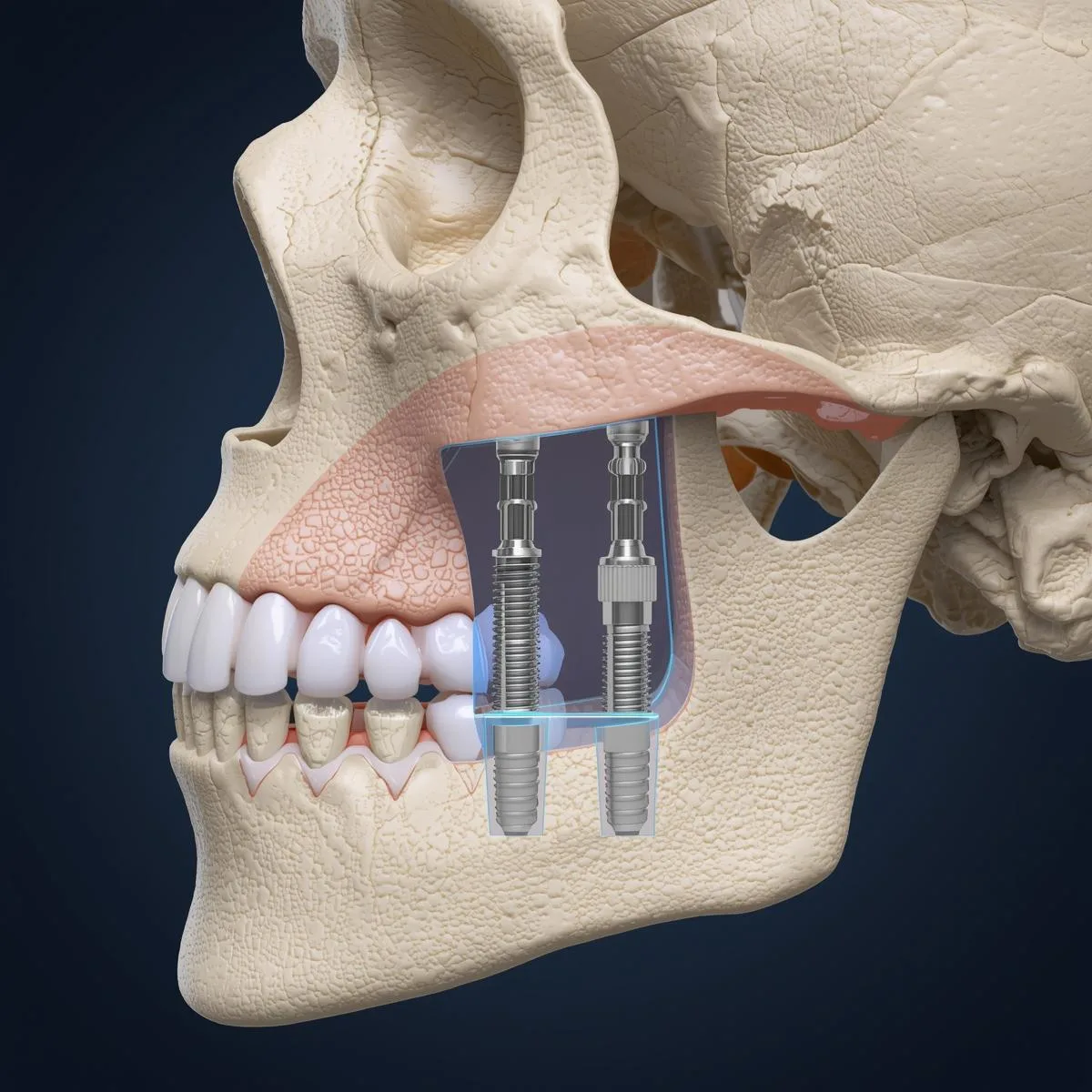
These are long implants used for the upper jaw with severe bone loss. They do not go into the jaw but rather go into the cheekbone, called the zygoma. This usually eliminates the sinus lifts or complicated bone augmentation procedures.
Dentists in dentick dental care located in BTM Layout and JP Nagar will carefully examine the patients to determine the appropriate implant types for effective results.
All-on-4 Dental Implants: Full-Arch Restoration
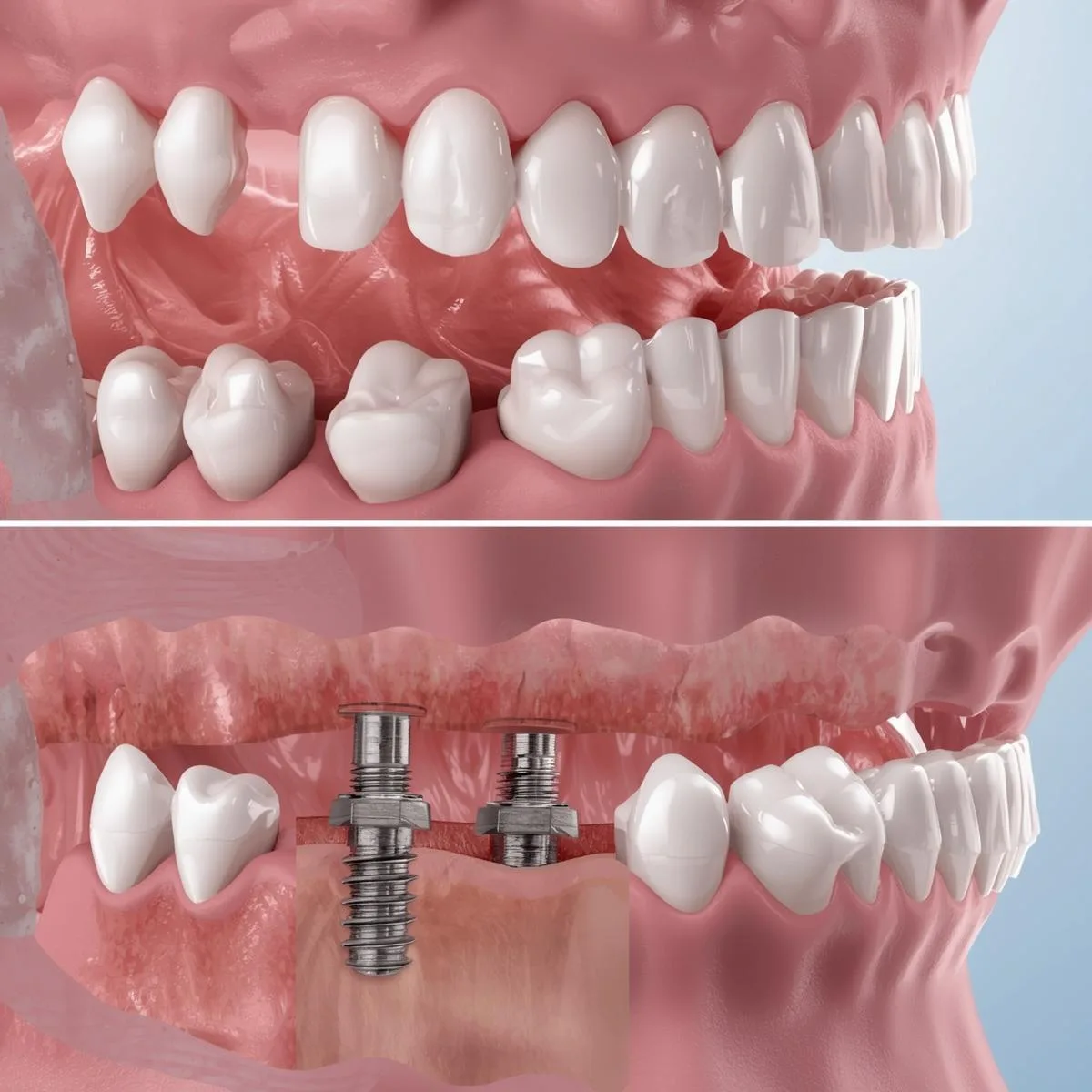
“All on Four” dental implants is a revolutionary way to replace teeth that are missing. All on Four is a teeth replacement process that requires the placement of only four implants to support an upper or lower full set of teeth. Benefits include decreased number of implants needed, quicker recovery time, as well as instant functionality.
Nevertheless, for anyone interested in a full-mouth solution, all on 4 implants provide stability, comfort. And aesthetical results without needing a separate implant per missing tooth.
Dental Implant Cost: What to Expect
The cost of a dental implant depends on various factors such as the quantity, type of restoration required, and location. Although implants are costly, they are very beneficial in the long run because they are long-lasting and require very little maintenance. To know further, book an appointment in dentick dental care now!!
Implantation Dentistry: Advanced and Reliable
Modern-day implant dentistry employs imagery technology, surgical guidance, and superior-quality materials to attain precision and comfort. Modern implant dentistry is an advanced branch of dentistry where the focus is on patient-specific dentistry for predictable results. Because of continuous advancements, implantation dentistry has made dental implants safer, faster, and more accessible.
Can Everyone Get a Dental Implant?
Anyone over the age of 18 can consider dental implants in dental care as long as they have healthy gums, they have enough bone to support the implantation of teeth. And they are in good health. There are cases of diseases such as gum diseases, diabetes, smoking, bone destruction that prevent patients from having dental implants. However, through treatment of the said diseases, one can qualify to have dental implants in an oral care setting.
Conclusion
Treatments are a proven long-term solution for restoring missing teeth while preserving oral health and facial structure. With various implant options, expert care from a periodontist is essential. Dentick dental care will provide you with an array of services, secure a consultation now!!!
FAQs
What are Dental Implants?
Yes. Dental implants are known to be a safe and established procedure and can be effective when carried out by an experienced dental expert.
Can everyone get a dental implant?
Adults usually qualify for dental implants, however, a strong gum health, sufficient jawbone volume. And a good health status are necessary.
Is the dental implant procedure painful?
Dentists usually perform this procedure under local anesthesia, ensuring patient comfort. Medication can effectively relieve any discomfort experienced during the treatment.
How long do dental implants last?
However with proper oral hygiene and regular dental check-ups, dental implants can last a long time, sometimes a lifetime.
What is the recovery time after dental implant surgery?
The initial healing will take a few days. While the full integration of the implant into the jawbone can take several months.