 WhatsApp

Dental Scaling & Polishing in Bengaluru
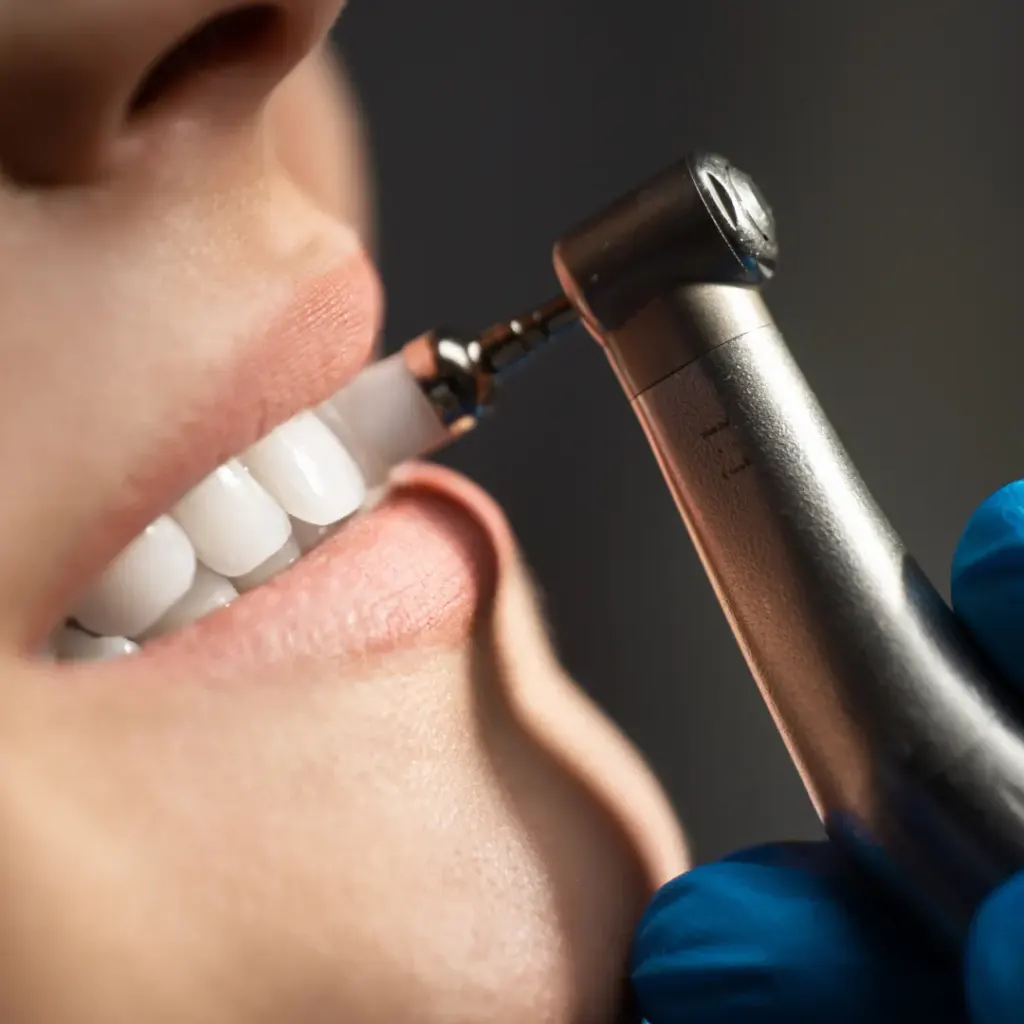
Professional teeth cleaning, scaling and polishing, every 6 months is the single most impactful thing you can do for your long-term oral health. At Dentick it is thorough, gentle, and affordable, at BTM Layout and JP Nagar.
Final cost is confirmed in writing after your examination, before any treatment begins. No hidden charges.
What Happens During Scaling & Polishing?
A routine cleaning at Dentick takes 30–45 minutes and covers all surfaces of every tooth.
-
1
Examination
Your dentist first examines your gums, teeth, and any existing restorations to assess tartar levels and check for signs of gum disease.
-
2
Ultrasonic Scaling
An ultrasonic scaler uses high-frequency vibrations to shatter and remove hardened tartar (calculus) from tooth surfaces and just below the gumline, without damaging enamel.
-
3
Hand Scaling
Fine hand instruments remove any remaining deposits, particularly in deep pockets between teeth and gums where the ultrasonic scaler cannot reach.
-
4
Polishing
A prophy cup and polishing paste buff tooth surfaces to a smooth finish. Smooth surfaces accumulate plaque more slowly, extending the time between cleanings.
-
5
Fluoride (if needed)
A fluoride treatment may be applied to strengthen enamel and reduce sensitivity after scaling, particularly if significant tartar buildup was present.
Six Signs It Is Time for a Clean
You can check most of these yourself in a mirror, before you book anything.
Your gums bleed when you brush
Healthy gums do not bleed. Bleeding is the earliest sign that plaque has been sitting along the gumline long enough to cause inflammation.
Hard deposits at the gumline
Yellow or brown build-up you cannot shift with a brush is tartar. Once it hardens, only a scaler removes it.
Bad breath that keeps coming back
If breath turns stale within a few hours of brushing, the smell is usually coming from bacteria living in tartar, not from what you ate.
Puffy gums, or gums pulling back
Swollen, tender gums, or teeth that look longer than they used to, both point to inflammation that has been there a while.
Teeth feel rough to your tongue
A smooth tooth surface collects plaque slowly. A rough one collects it fast, which is why polishing is part of the appointment.
It has been over six months
Six months is the standard interval for most adults. Every three to four months if you smoke, have diabetes, or have had gum disease before.
Why Tartar Cannot Just Be Brushed Off
Plaque is soft and brushing removes it. Left alone, it hardens into tartar in roughly one to three days, and at that point a toothbrush does nothing to it. Tartar is porous, so it holds bacteria against the tooth and against the gum all day.
The gum responds by pulling away slightly, which opens a small pocket. The pocket traps more plaque, which hardens in turn, and the pocket deepens. That slow cycle is gum disease, and it is the most common reason adults lose teeth that were otherwise healthy.
Caught early, the fix is the routine clean described above. Once pockets have formed, the treatment becomes root planing below the gumline, which takes longer and costs more. A cleaning every six months is what keeps you in the first category.
Scaling & Polishing Cost in Bengaluru
Preventive Cleaning
| Treatment | Price |
|---|---|
| Scaling & Polishing (full mouth) | ₹800 – ₹2,000 |
| Laser-enhanced scaling | ₹1,500 – ₹2,500 |
| Fluoride application | ₹1,000 |
Recommended every 6 months as part of routine preventive care.
The First Few Days After Your Clean
- Mild sensitivity to hot and cold is normal for one to two days, and settles on its own. A sensitive toothpaste for a week or two helps if it bothers you.
- Gums may feel tender and bleed a little on the first day, especially if there was a lot of tartar. That settles as the inflammation goes down.
- Brush and floss as normal the same day. Gums recover faster when they are kept clean, not when they are left alone.
- If fluoride was applied, wait 30 minutes before eating or drinking so it has time to work.
- Teeth may look slightly different. Where heavy tartar was bridging a gap, you will see the real gap once it is gone. The tartar was never holding anything in place, and the gums tighten back up as they heal.
Scaling & Polishing: Questions Answered
Our current charge is on the pricing section above and on the price list. Scaling, teeth cleaning, dental cleaning and "teeth washing" all describe the same appointment, so a quote under any of those names is for this treatment. If deep cleaning below the gumline is needed, that is quoted separately and explained before we start.
Yes. "Washing" or "cleaning" the teeth is the everyday way of describing scaling and polishing, removing hardened tartar with an ultrasonic scaler, then polishing the surfaces smooth. There is no separate cheaper procedure by another name.
A regular clean removes tartar from the visible tooth surface and just below the gumline. Deep cleaning, root planing, goes further beneath the gum to the root surface, and is needed when gum disease has already created pockets. Your gum measurements at the assessment decide which one you actually need, and we will tell you if the cheaper one is enough.
No. This is a very common misconception. Scaling removes tartar from the surface of enamel. It does not remove enamel itself. Ultrasonic scalers are calibrated to be effective on tartar without touching the underlying tooth structure.
It is normal to experience mild sensitivity for 1–2 days after scaling, particularly to hot and cold. This settles on its own. Using a sensitive toothpaste for a week or two helps.
For most adults, every 6 months is ideal. If you have a history of gum disease, smoke, or have diabetes, your dentist may recommend every 3–4 months.
Scaling removes tartar, not surface stains. Polishing removes some extrinsic (surface) staining. For significant whitening, professional teeth whitening is recommended alongside scaling.
Not quite. Routine scaling and polishing cleans above and just below the gumline. A "deep cleaning" (scaling and root planing) goes further below the gumline to treat gum disease specifically, and is usually only needed if periodontal pockets are present.
Not sure what you need?
Answer a few quick questions about what is bothering you. We will point you to the treatment it usually relates to, show the typical price range, and give you a short list of questions to ask at your appointment. Takes about a minute.
This is automated guidance based only on what you told us. It is not a diagnosis and not a quote. Only an examination by Dr. Divyashree can tell you what you actually need and what it will cost.
What people say after their visit
Live Google reviews from patients treated at BTM Layout 2nd Stage.









Book Scaling & Polishing Today
Available at BTM Layout 2nd Stage and JP Nagar 7th Phase. Takes under an hour. Results you will feel and see.